Queer Places:
Yale University (Ivy League), 38 Hillhouse Ave, New Haven, CT 06520
Grove Street Cemetery, New Haven, New Haven County, Connecticut, USA
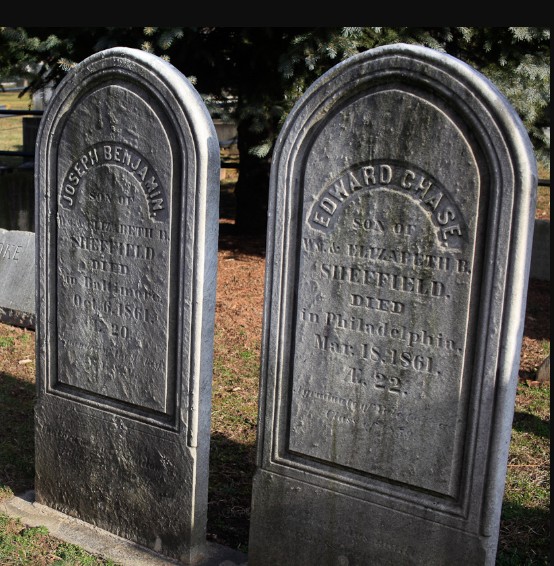 Edward Chase Sheffield (December 13, 1839 - March 18, 1861) was an American scholar and Yale College graduate (Class of 1859) whose surviving 1858 diary serves as a
significant primary source in the history of 19th-century male intimacy, Christian spiritual bonding, and student culture in American higher education.
Edward Chase Sheffield (December 13, 1839 - March 18, 1861) was an American scholar and Yale College graduate (Class of 1859) whose surviving 1858 diary serves as a
significant primary source in the history of 19th-century male intimacy, Christian spiritual bonding, and student culture in American higher education.
Born into a prominent Connecticut family on December 13, 1839, Edward was the son of William Sheffield (1785–1849) and Elizabeth Bird Chase Sheffield (1797–1877).
He grew up alongside his older brother, Joseph Benjamin Sheffield (1831–1861). Tragically, the family experienced deep loss in 1861: both brothers passed away in the same
year, with Edward dying on March 18, 1861 at age 21, less than two years after graduating from Yale.
During his time at Yale, Sheffield kept a detailed personal diary running from January to September 1858. The diary—analyzed prominently in Matthew Busick’s 2007 Yale
history thesis, "Becoming a Yale Man: Intimacy among Yale Students in the Nineteenth Century"—documents Edward's complex inner life and his deep bond with fellow student
Asher Wilcox (often referred to simply as "A.").
Sheffield regularly recorded spending nights with Wilcox. The text details shared bed-space, waking together for early morning prayers, and returning to bed
together—practices that were common in 19th-century male student dormitories.
Their connection was bound up in 19th-century Christian piety, emotional vulnerability, mutual moral accountability, and shared prayer.
Sheffield wrote candidly about his struggles with feelings of isolation, fear of academic failure, and his deliberate efforts to "act the man" and integrate into Yale’s
social life.
Historians of gender and sexuality examine Sheffield’s writings as a key example of 19th-century "romantic friendships":
In the mid-1800s, deep emotional, physical, and bed-sharing intimacy between young men was widely accepted and actively encouraged as a healthy part of Christian
character formation and male fellowship prior to modern concepts of sexual orientation.
Diaries like Sheffield's provide primary evidence of romantic, affectionate, and co-dependent same-sex relationships prior to the late 19th-century medicalization of
sexuality. Regardless of physical specifics, his records showcase a rich history of male-male devotion, tenderness, and love in antebellum America.
References:
- Edward Chase Sheffield Papers (1858): Repository: Manuscripts and Archives, Sterling Memorial Library, Yale University.
- Busick, Matthew, "Becoming a Yale Man: Intimacy among Yale Students in the Nineteenth Century" (MSSA Kaplan Prize, Yale University, 2007)
Support this project
This website is a passion project researched, developed, and funded entirely by me. If you find the content valuable and would like to help support the ongoing research and hosting costs, any contribution is deeply appreciated.
Thank you for keeping this independent resource alive!
My books on Amazon: Elisa Rolle's books
BACK TO HOME PAGE